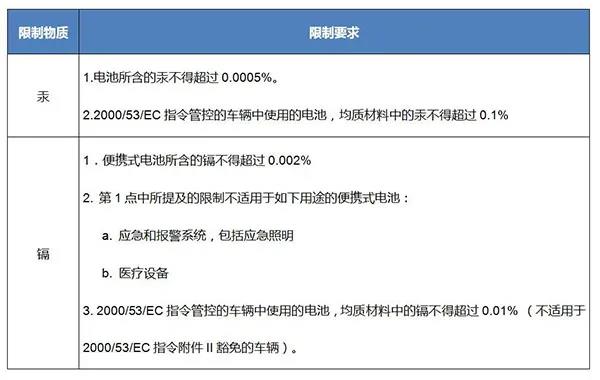
On December 10, 2020, the European Union issued a draft of a new battery law, intending to abolish the current EU battery directive, transform its battery control requirements from "directives" to "regulations", and plan to establish a new battery regulatory framework. The draft reclassified batteries into four categories: portable batteries, car batteries, electric vehicle batteries and industrial batteries. The draft of the new battery law still maintains the restrictions on mercury and cadmium in batteries in the current EU battery directives, but the restrictions and exemptions are planned to be technically updated.
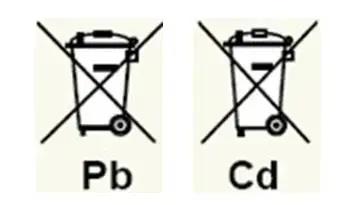
If the battery or accumulator has the following conditions: cadmium content> 0.002%, or lead content> 0.004%, it should be marked as shown in the figure below, and the symbol of the element should be marked. The battery directive also clearly stipulates the size of the logo, and the area occupied by the chemical symbol is at least one-fourth of the logo of the fork-wheeled trash can.
The new restrictions on hazardous substances are as follows
In addition, the revised draft also puts forward new requirements for the sustainability and safety of batteries, including mandatory requirements for carbon footprint, renewable raw materials, electrochemical performance and durability, detachability and replaceability, and safety. . The draft also proposes goals and requirements for battery labels and information, battery waste management, and battery information traceability.
The draft is expected to be implemented on January 1, 2022. The current battery directive will expire on July 1, 2023, except for the extended period of application of some provisions. The draft is currently receiving public comments, and the consultation period will end on March 1, 2021.